
NEWS
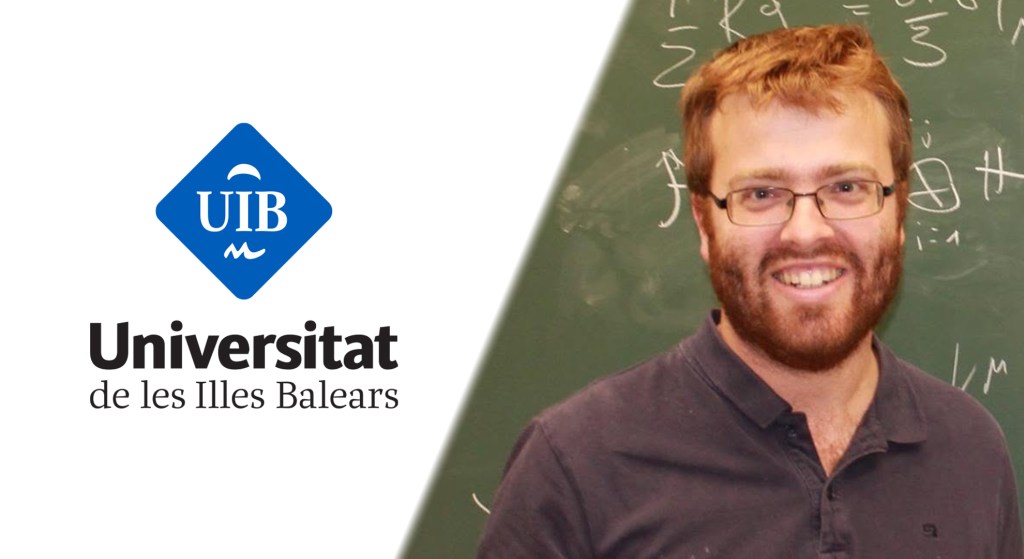
Llibert Aresté Saló Appointed Assistant Professor at the University of the Balearic Islands
Llibert Aresté Saló has joined the University of the Balearic Islands in Palma as an Assistant Professor (Professor ajudant doctor). This new faculty appointment marks an exciting milestone in his academic career. With his transition to a faculty position, Aresté Saló has also transitioned from a Junior Associate to a Senior Associate in our collaboration. Congratulations to Llibert on this exciting new chapter in his academic career! MORE INFORMATION…
Our Senior Associate José M. Ezquiaga Awarded €1.5 Million ERC Starting Grant to Explore the Furthest Binary Black Holes
José M. Ezquiaga has been awarded a €1.5 million European Research Council (ERC) Starting Grant for his project, furthestBBH. The five-year project will use gravitational-wave lensing to explore the most distant binary black holes, combining theory, simulations, and data analysis to advance our understanding of cosmology, astrophysics, and gravity. READ MORE…


First Simons Annual Meeting Held in New York
The inaugural annual meeting of the Simons Collaboration on Strong Gravity and Black Holes was held in New York City on May 7–8, 2026. The meeting brought together collaboration members and researchers across strong-gravity theory, computation, and gravitational-wave science to assess early progress and coordinate future collaborative directions through shared tools, workshops, and community initiatives.
Speakers included our PIs Vitor Cardoso, Katy Clough, Neil Cornish, Jonathan Gair, Daniel Holz, Gary Horowitz, Alex Lupsasca, and Nicolás Yunes. The meeting was hosted by the Simons Foundation and is planned to be held annually each May in New York. READ MORE…
First Blast Module Launches with Talks on Black Holes and Strong Gravity
Our collaboration held its first Blast Module on May 6, 2026, at PGI Open Space at Princeton University, featuring talks by our PIs, Katy Clough and Alex Lupsasca. Clough presented recent developments in effective field theories beyond general relativity and their applications to strong-gravity simulations, while Lupsasca discussed the connection between black hole ringdown and photon rings.

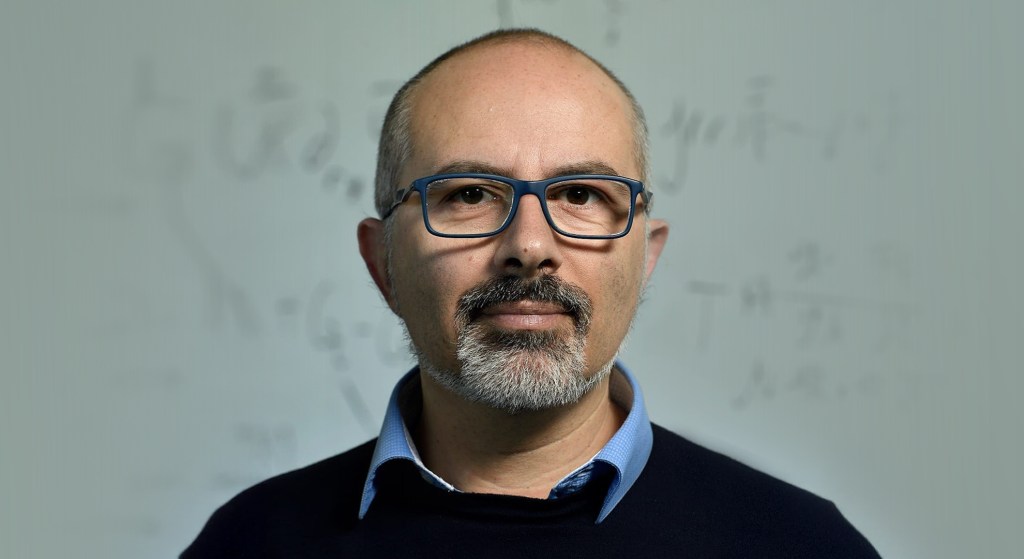
Emanuele Berti Named American Association for the Advancement of Science Fellow
Our PI, Emanuele Berti, has been named a Fellow of the American Association for the Advancement of Science. This honor recognizes distinguished contributions to science and engineering, and his work in gravitational physics and black hole research has played a significant role in advancing our understanding of the universe. READ MORE…
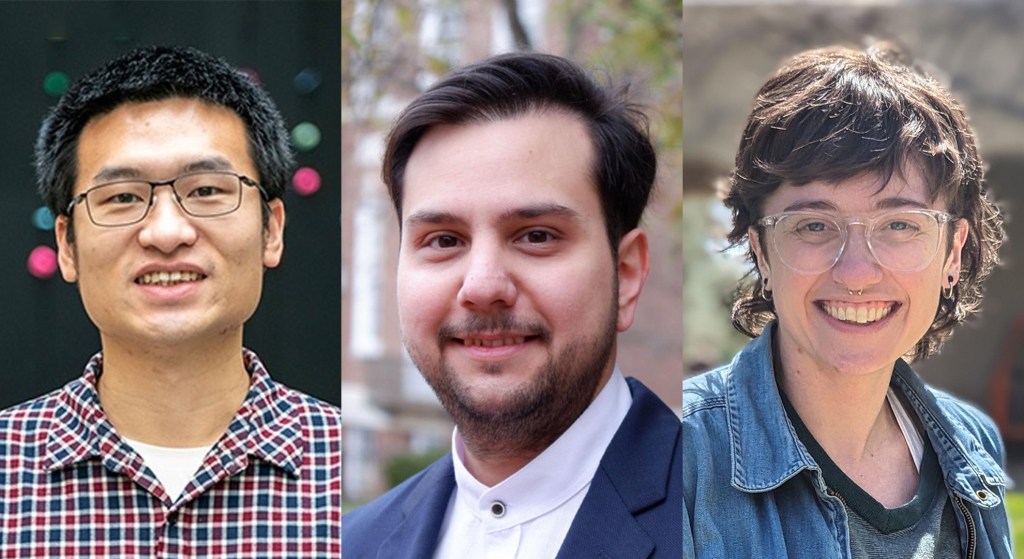
Sizheng Ma, Konstantinos Kritos, and Simona Miller Selected for NASA Astrophysics Postdoctoral Fellowships
Our postdoctoral researcher, Sizheng Ma, and graduate students Konstantinos Kritos and Simona Miller have been selected for the 2026 NASA Astrophysics Postdoctoral Fellowships.
Ma (Einstein Fellow) is currently at the Perimeter Institute for Theoretical Physics, working with our PI, Luis Lehner, and will continue his research at Johns Hopkins University. Kritos (Hubble Fellow) is a PhD student advised by our PI, Emanuele Berti, and is expected to receive his PhD in physics from Johns Hopkins University in 2026 before beginning a postdoctoral position at Stony Brook University. Miller (Einstein Fellow) is a PhD student advised by our Associate, Katerina Chatziioannou, at the California Institute of Technology, and is expected to receive her PhD in physics in 2026 before beginning a postdoctoral position at City University of New York. READ MORE…
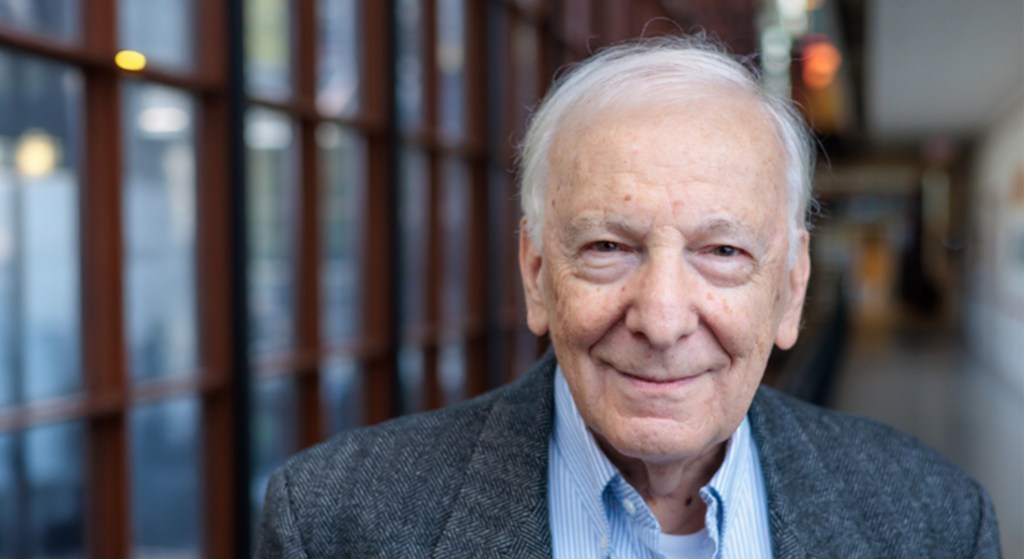
Our Senior Associate Robert Wald Awarded the 2025 ICTP Dirac Medal
Robert Wald was awarded the 2025 ICTP Dirac Medal by the Abdus Salam International Centre for Theoretical Physics, recognizing his foundational contributions to gravitational theory, including the formulation of black hole entropy as a Noether charge in diffeomorphism-invariant theories and key advances in quantum field theory in curved spacetime. Announced in August 2025, the award was celebrated at the Dirac Medal ceremony and lectures held on March 25, 2026 in Trieste, Italy, where the awardees presented their work. READ MORE…
Gary Horowitz Awarded the 2025 ICTP Dirac Medal
Our PI, Gary Horowitz, was awarded the 2025 ICTP Dirac Medal by the Abdus Salam International Centre for Theoretical Physics, recognizing his pioneering contributions to gravitational physics, including foundational work on spacetime geometry, quantum gravity, and string theory. Announced in August 2025, the award was celebrated at the Dirac Medal ceremony and lectures held on March 25, 2026 in Trieste, Italy, where the awardees presented their work. READ MORE…


Our PI Invited to Give a Simons Presidential Lecture: “The Black Hole Explorer — Tracing an Edge of the Visible Universe”
Alex Lupsasca has been invited to deliver a Simons Foundation Presidential Lecture titled “The Black Hole Explorer: Tracing an Edge of the Visible Universe.” In this talk, he will present the Black Hole Explorer mission concept and discuss how high-resolution observations of photon rings could enable new tests of gravity near black holes. READ MORE…
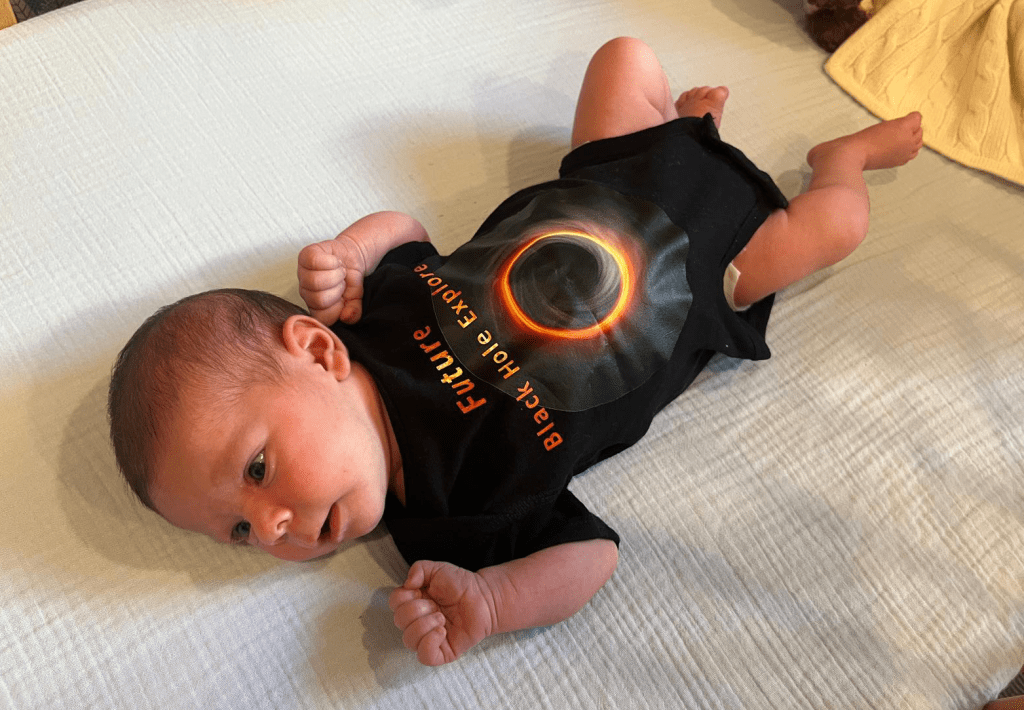
Celebrating the Arrival of a Future Black Hole Explorer
We are delighted to celebrate the arrival of Alina, the daughter of Alex Lupsasca. This joyful milestone marks a special moment for the Lupsasca family and for our collaboration. We are thrilled to welcome Alina to our community and to share in this happy occasion.
Please join us in congratulating the family and welcoming our newest (and youngest!) future black hole explorer🎉
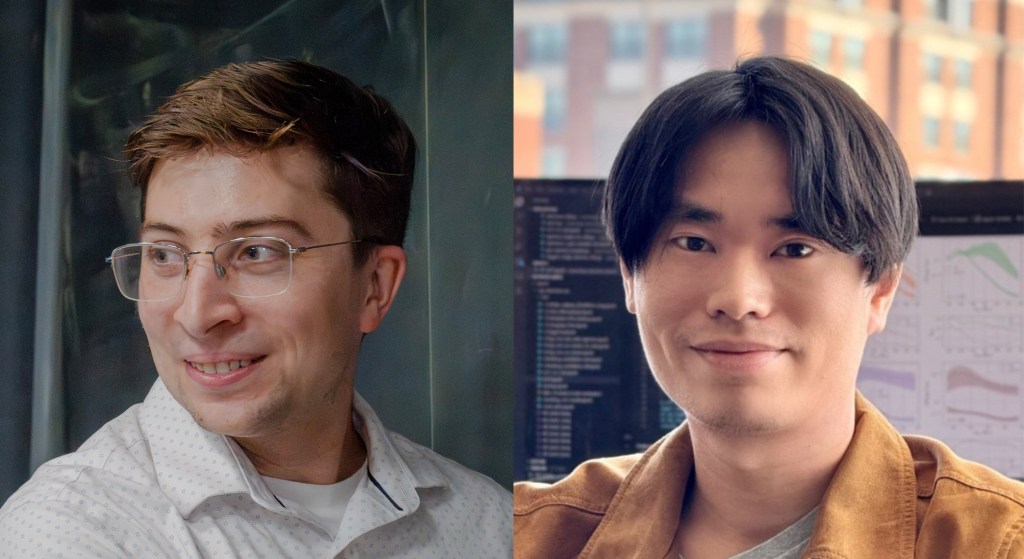
Our Junior Associate Isaac Norman Legred and Mark Ho-Yeuk Cheung Named Finalists for the 2026 Cecilia Payne-Gaposchkin Dissertation Award in Astrophysics
Isaac Norman Legred was recognized for outstanding contributions to our understanding of dense nuclear matter and the astrophysical properties of neutron stars, combining astronomical observations with nuclear theory calculations and advanced numerical modeling. Mark Ho-Yeuk Cheung was cited for opening new research avenues in gravitational-wave astronomy, including black hole spectroscopy, gravitational-wave lensing, and searches for high mass ratio binaries in LIGO–Virgo–KAGRA data. READ MORE…
New Theoretical Breakthrough in Neutron Star Physics
Our PI, Nicolás Yunes, together with Abhishek Hegade and collaborators, has developed a new theoretical framework to understand how inspiraling neutron stars respond to tidal forces. The work demonstrates that these tidal responses can be described in terms of oscillation modes, extending key results from Newtonian gravity to general relativity. Published as an Editor’s Suggestion in Physical Review Letters, this breakthrough opens new possibilities for probing the internal structure of neutron stars using gravitational waves. READ MORE…

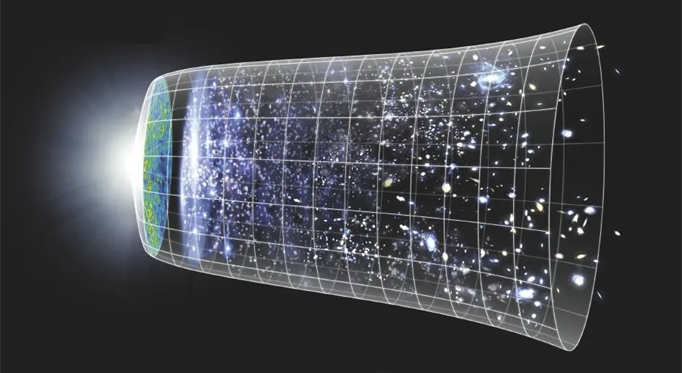
New Gravitational-Wave Method Advances Understanding of the Hubble Tension
A team including our PIs, Nicolás Yunes and Daniel Holz, has developed a new method to measure the expansion rate of the universe using gravitational waves. The method uses the gravitational-wave background from unresolved black hole mergers to improve measurements of the Hubble constant, offering a new approach to probing the Hubble tension. READ MORE…
1st December Collaboration Meeting in Chicago Brings Collaboration Together
Our first December collaboration meeting, held from December 15–17, 2025 at the SkAI Institute in Chicago, brought together researchers across disciplines to exchange ideas and advance new directions in black holes and strong gravity. The meeting marked an important step toward building a truly interdisciplinary collaboration and laid a strong foundation for accomplishing the goals of this collaboration—goals that none of the PIs could otherwise achieve on their own.

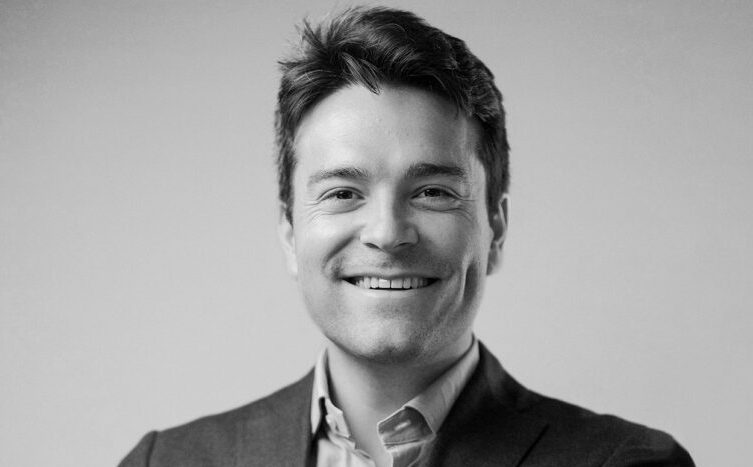
Alex Lupsasca Awarded the 2025 Jon C. Graff, PhD Prize
Our PI, Alex Lupsasca, has been awarded the Jon C. Graff, PhD Prize by the Society for Science. The prize recognizes outstanding achievements in science and honors researchers whose work has made significant contributions to advancing our understanding of the universe. Lupsasca’s research in black hole physics and strong gravity has played an important role in shaping the field. READ MORE…
Mihalis Dafermos Awarded the 2026 AMS Bôcher Memorial Prize
Mihalis Dafermos, has been awarded the 2026 AMS Bôcher Memorial Prize by the American Mathematical Society. The prize recognizes work on the C0-stability of the Kerr Cauchy horizon, addressing fundamental questions about the global uniqueness of solutions to the Einstein equations in general relativity. These results challenge long-standing expectations and prompt a reexamination of key issues in the field. The award is shared with Jonathan Luk of Stanford University. READ MORE…

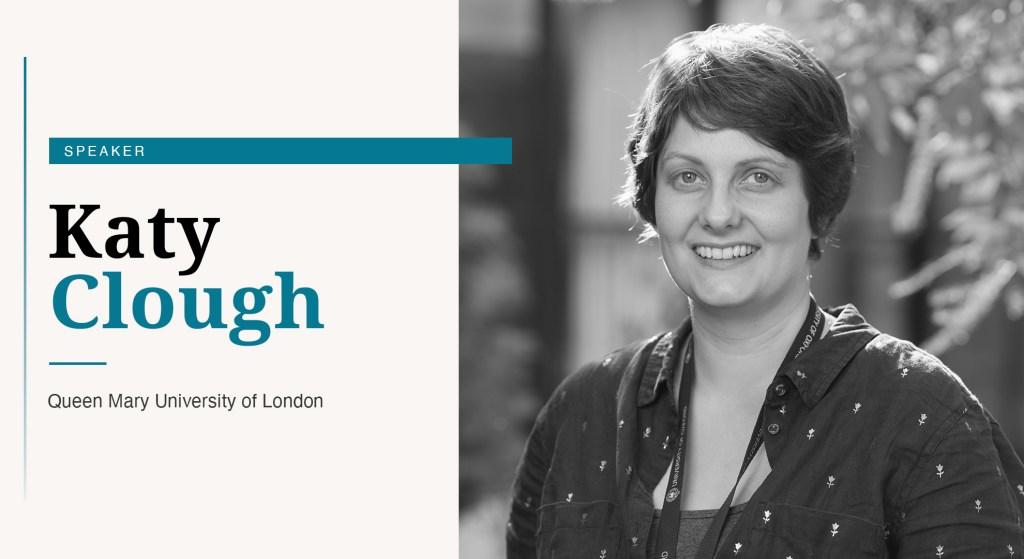
Katy Clough Speaks at New Scientist Live on Gravitational Waves
Our PI, Katy Clough of Queen Mary University of London, spoke at New Scientist Live London 2025 as part of a featured public talk on gravitational waves. In her talk, she highlighted how gravitational-wave observations are transforming our understanding of black holes and strong-gravity phenomena, offering new ways to probe the most extreme environments in the universe. READ MORE…
Alex Lupsasca Joins OpenAI, Bridging Black Hole Physics and Artificial Intelligence
Alex Lupsasca will be joining the OpenAI for Science initiative. In addition to his research at Vanderbilt, he will work with OpenAI to explore how AI can help address research-level challenges in astrophysics. READ MORE…
New Simons Collaboration Explores Black Holes and Strong Gravity
Nicolás Yunes of the University of Illinois Urbana-Champaign will lead the collaboration’s work to better understand the physics of strong gravity, such as that of black holes. READ MORE…
New $8-million Simons Collaboration on Black Holes and Strong Gravity will decipher secrets encoded in gravitational wave data
The Simons Foundation announced today it will fund a new multidisciplinary multi-institutional collaboration focused on strong gravity. The Simons Collaboration on Black Holes and Strong Gravity will support the work of 12 co-PIs at 12 separate institutions—gravity and black-hole experts working in theoretical physics, mathematics, numerical computation, AI-assisted data analysis, and gravitational wave observation—to develop a robust theoretical framework for deciphering the secrets encoded in gravitational wave (GW) data, including possible extensions to Einstein’s theory of general relativity. READ MORE…
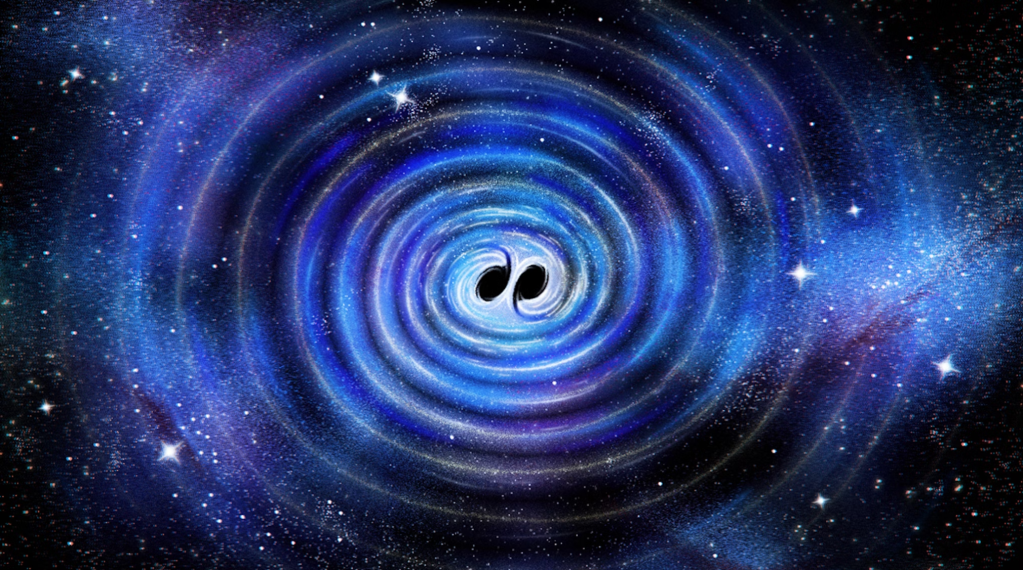
Ringing Black Hole Confirms Einstein and Hawking’s Predictions
New observations of a merger of two black holes confirm decades-old predictions by Albert Einstein, Stephen Hawking and Roy Kerr. The findings emerged from analyses led by Flatiron Institute astrophysicists using the clearest measurements to date of a black hole merger taken by the Laser Interferometer Gravitational-Wave Observatory (LIGO). READ MORE…